Editorial standards
Goprostadine Editorial Standards: How We Write and Check
Goprostadine editorial standards are the rules the Prostadine label desk follows when it writes and checks every page. Facts come from the bottle front, the vendor's pages and public sources such as NIH, FDA, FTC and peer-reviewed studies. Sales claims are quoted and answered, amounts are never invented, and the site says openly that it earns money from order links.
Written by the Prostadine label deskUpdated
Who writes01
Who writes and checks the Goprostadine pages?
The Prostadine label desk writes them. A medical reviewer is a planned slot that is not filled yet.
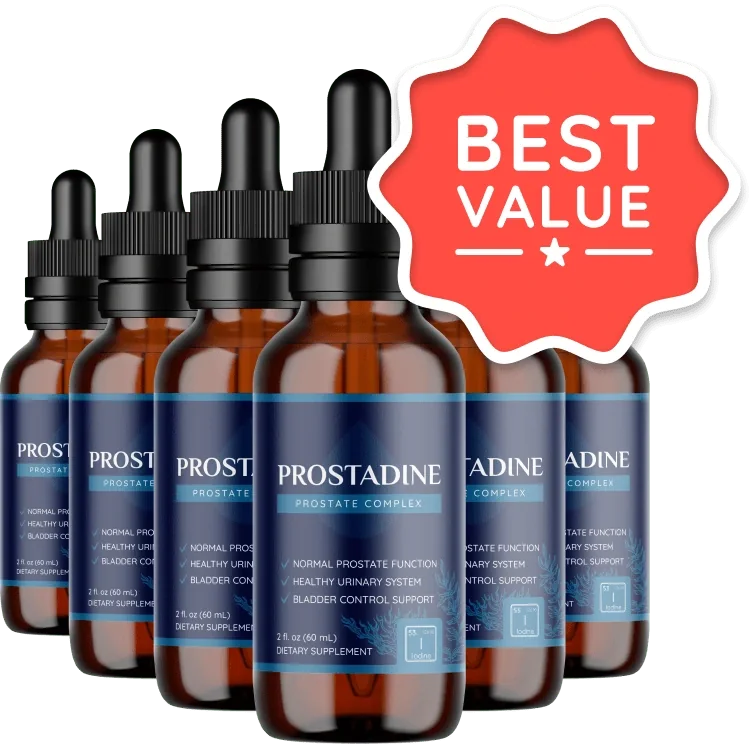
Every page is written by the Prostadine label desk at Goprostadine, a USA Authorized Prostadine Retailer. The desk reads the bottle front and the vendor's pages line by line, then checks each fact against a public source. Goprostadine is not the manufacturer (Prostadine contact page).
Each health page has a place for a medical reviewer. That slot is empty today, and we do not print a name until a real review is on file. A page never says "doctor reviewed" unless a doctor has reviewed it. See the about page.
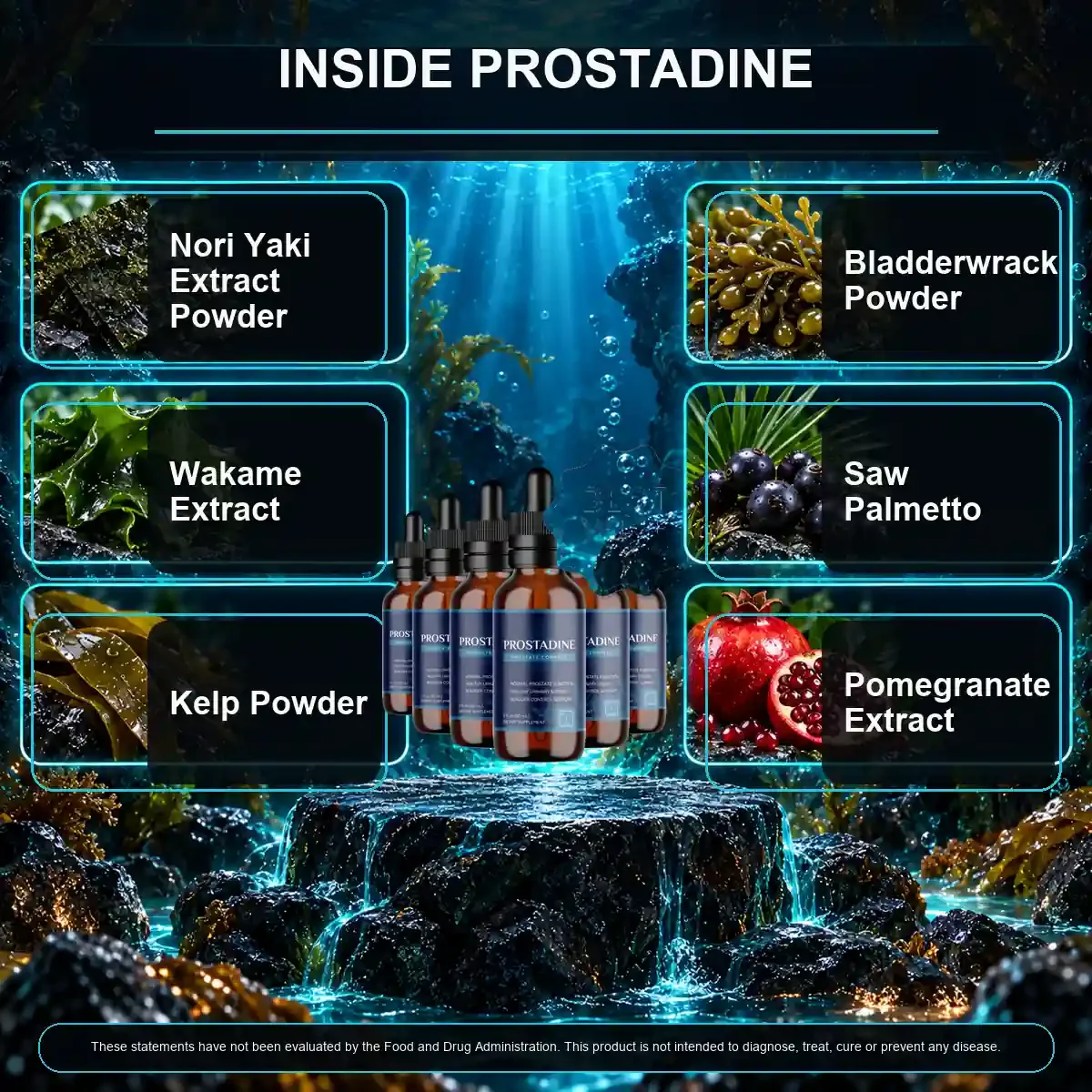
The desk works from vendor material, which counts as claims, not proof. Where the vendor leaves something out, such as ingredient amounts, we write "not printed."
Claim checks02
How are Prostadine claims checked?
Each claim is traced to its source, then compared with public evidence before it is printed.
We check a claim in four steps: find where it comes from, read the best public evidence, decide what the evidence supports, and write only that. A fact with no source is dropped or labeled as unverified.
Trace it
Is it on the bottle front, on the sales page, or only in a news item or blog? The bottle wins over the sales page.
Find the evidence
We look for human trials first, then reviews of trials, then lab or animal work. We say which kind we found.
Match the product
A study of an ingredient does not test Prostadine. We say so each time.
Write what is supported
If the evidence is thin or missing, the page says that in plain words.
Prices, shipping fees and refund rules are read from the vendor's pages and dated October 19, 2026 (Prostadine sales page) (Prostadine refund page).
Sources03
What sources are allowed on Goprostadine?
Government health agencies, peer-reviewed studies and the vendor's own pages, each used for what it can show.
| Source | Used for |
|---|---|
| NIH and NCCIH fact sheets (NIH ODS, Iodine) (NCCIH, Using Dietary Supplements Wisely) | Iodine limits, supplement safety, herb-drug cautions |
| Peer-reviewed trials and reviews (Bent et al., NEJM 2006) (Barry et al. (CAMUS), JAMA 2011) | Whether an ingredient helped in people |
| FDA and FTC pages (FDA 101: Dietary Supplements) (FTC, Health Products Compliance Guidance) | What claims are allowed and what regulation means |
| NIDDK and NHS (NIDDK, Enlarged Prostate (BPH)) (NHS, Prostate Enlargement) | Prostate conditions, symptoms and urgent signs |
| The vendor's pages (Prostadine sales page) (Prostadine refund page) | What is claimed, priced and promised, never as proof |
We do not use testimonials, sample reviews or sales copy as evidence. The vendor's reviews, scores and customer counts are reported only in quotes, as unverified claims (FTC, Health Products Compliance Guidance).
Quoting04
Why do you quote sales claims instead of repeating them?
A quote shows you what the vendor said, so you can read it next to the evidence.
We put a sales claim in quotation marks because repeating it plainly would present it as our own statement. The sales page says things like "clinically proven" and "manufactured in an FDA-approved facility." Neither is something we can confirm, and the second cannot be right as worded, because FDA registers facilities but does not approve them (FDA, Food Facility Registration Q&A).
So we quote, then answer. The FTC says "clinically tested" style wording can mislead without proof (FTC, Health Products Compliance Guidance), and we avoid it in our own voice.
Study limits05
How do you handle study limits?
We state each study's size, length, design and what it did not test.
A study is not good or bad by itself; its limits decide how far it reaches. We name the number of people, the dose, the length and whether a placebo group was used.
For example, 225 men took saw palmetto for one year and did no better than placebo (Bent et al., NEJM 2006). A later trial of 369 men used up to three times that dose for 72 weeks, with the same result (Barry et al. (CAMUS), JAMA 2011). A pomegranate juice study in men with rising PSA after cancer treatment had no placebo group (Pantuck et al., Clin Cancer Res 2006). We never present that as proof of a benefit for BPH.
A case report, such as one man who developed an overactive thyroid on kelp tablets, shows a possibility, not a rate (Gherbon et al., Medicine 2019).
Money06
Do you accept payment for positive coverage?
We earn money from order links, which is a conflict of interest, and we limit it with rules.
Goprostadine earns money when you buy through its order buttons, and we say so on every page. We do not sell wording. The same weak points appear on our pages regardless: no amounts, an unknown iodine total, failed saw palmetto trials and unsourced sales claims.
We publish no star score, review count or customer quote until it is matched to a real order. The FTC has banned fake and undisclosed paid reviews (FTC, Fake Reviews Final Rule 2024), and warns that fake reviews are hard to spot by reading (FTC, How to Evaluate Online Reviews). Read how we treat them on the reviews page.
Badges are not certificates. The vendor's "doctor formulated" badge names no doctor, so we caption it as unchecked.

Corrections07
How are corrections made, and when were the pages last reviewed?
Email the website desk. A confirmed error is fixed and the update date changes.
Send corrections to [email protected], Monday to Friday, 9:00am to 5:00pm ET. That inbox handles page errors, typos, privacy and press. It cannot see orders. For tracking and refunds on placed orders, call +1 (302) 200-3480.
When the desk confirms an error, we fix the page, recheck the sources and change the update date. These standards were last reviewed on October 19, 2026.
References08
What are the core references behind these standards?
Four sources shape most of our rules.
- Iodine: Fact Sheet for Health Professionals. NIH Office of Dietary Supplements, 2024.The adult RDA is 150 mcg/day (220 mcg in pregnancy, 290 mcg in lactation) and the adult Tolerable Upper Intake Level is 1,100 mcg/day. High intakes can cause goiter, raised TSH and hypothyroidism, and also iodine-induced hyperthyroidism, thyroiditis and thyroid papillary cancer; people with autoimmune thyroid disease may react at intakes that are safe for others. Commercially available seaweeds in whole or sheet form range from 16 mcg/g to 2,984 mcg/g of iodine, content varies widely by species and growing conditions, and 5 g of dried flaked nori gives 116 mcg. High-dose iodine can add to antithyroid drugs, and potassium iodide can raise potassium (hyperkalemia risk) with ACE inhibitors and potassium-sparing diuretics.
- Saw palmetto for benign prostatic hyperplasia. Bent S, Kane C, Shinohara K, Neuhaus J, et al. (New England Journal of Medicine), 2006.A double-blind trial randomised 225 men over 49 with moderate-to-severe BPH symptoms to saw palmetto extract 160 mg twice a day or placebo for one year. There was no significant difference in AUA Symptom Index change (mean difference 0.04 points, 95% CI -0.93 to 1.01) or in maximal urinary flow (0.43 ml/min, 95% CI -0.52 to 1.38), nor in prostate size, residual volume, quality of life or PSA. Side effects were similar in both groups. The authors conclude saw palmetto did not improve symptoms or objective measures of BPH.
- FDA 101: Dietary Supplements. U.S. Food and Drug Administration, 2022.A product intended to treat, prevent, cure or alleviate the symptoms of a disease is regulated as a drug, even if labelled a supplement. FDA does not approve supplements before sale and cannot approve them for safety and effectiveness or approve their labels; companies must ensure their products are safe and comply with the law and can usually market without notifying FDA. After marketing, FDA periodically inspects manufacturing facilities, reviews labels and websites for disease claims, monitors adverse event reports, and can seek recalls or removal of dangerous products. Supplements can interact with medications, interfere with lab tests and pose risks during surgery (content current as of 06/02/2022).
- Health Products Compliance Guidance. U.S. Federal Trade Commission, 2022.Health benefit and safety claims need 'competent and reliable scientific evidence', and the FTC generally expects randomised, controlled human clinical testing to meet that standard. An honest testimonial does not by itself substantiate a claim, testimonials reporting more dramatic results than typical are likely deceptive, and a 'results not typical' disclaimer does not cure that. A phrase like 'clinically tested' can imply proof of benefit, a disease claim can be implied without naming the disease, and a DSHEA disclaimer does not cure a deceptive health claim. Expert endorsers must be qualified and any material connection must be clearly disclosed (guidance published December 20, 2022; the last part of the page was not read).
FAQ09
Editorial standards questions, short answers
How are claims checked?
We trace each claim to its source, find the best public evidence, match it to the product and write only what is supported. Bottle-front facts outrank sales-page copy. Anything unsourced is dropped or labeled unverified.
What sources are allowed?
We use NIH, NCCIH, FDA, FTC, NIDDK and NHS pages, peer-reviewed trials and reviews, and the vendor's own pages for what is claimed and priced. We do not use testimonials, sample reviews or other brands' blogs as evidence.
Do you accept payment for positive coverage?
No, we do not sell wording. We do earn money when you order through our links, which we disclose on every page. The same weak points appear whatever the vendor wants, and no review or score is shown until it is verified (FTC, Fake Reviews Final Rule 2024).
How are corrections made?
Email [email protected] with the page and the error. When the desk confirms it, we fix the text, recheck the sources and update the date shown on the page. Order problems go to +1 (302) 200-3480, because the website inbox cannot see orders.
Why do you quote sales claims instead of repeating them?
Because repeating a claim plainly would make it ours. We quote it, then answer it with evidence. Phrases like "clinically proven" can mislead without proof (FTC, Health Products Compliance Guidance), and "FDA-approved facility" cannot be right, since FDA does not approve facilities (FDA, Food Facility Registration Q&A).
How do you handle study limits?
We report the number of people, the dose, the length and whether a placebo was used. Case reports and animal work are labeled as such.
When were the pages last reviewed?
The pages were last updated on October 29, 2026, when prices, shipping and refund rules were read from the vendor's pages. Each page shows its own update date. A medical reviewer is not named yet, and no page claims a doctor review.
Who wrote this10
Written and reviewed by
Pages built from the bottle front, the sales page and linked NIH, FDA, FTC and peer-reviewed sources.
Last updated . See our editorial standards and how we check reviews. This website is run by Goprostadine, a USA Authorized Prostadine Retailer, not by the manufacturer. We are paid when you buy through our order links.
Keep reading
More about Prostadine



USA Authorized Prostadine Retailer
Ready to try Prostadine?
Show the bottle to your doctor first, as the sales page itself advises, then pick a pack. Bigger packs cost less per bottle, and the 60-day guarantee counts from delivery.
- Secure BuyGoods checkout
- 60-day money-back guarantee
- Ships from the U.S.