Prostate basics
Enlarged Prostate (BPH): Symptoms, Causes and Care Basics
An enlarged prostate, called BPH, is a common non-cancer growth of the gland that can slow the urine stream and send you to the bathroom often. About 29% to 33% of men 65 and older have it. Care starts with a doctor's exam. Some signs, such as being unable to pass urine, need same-day care.
Written by the Prostadine label deskUpdated
The gland01
What is the prostate and where is it?
The prostate is a walnut-sized gland that sits just below the bladder. The urethra, the tube that carries urine out of the body, runs through its middle (NHS, Prostate Enlargement). It also produces part of the fluid in semen.
That position is the whole story of BPH. The gland surrounds the tube, so when it grows it can squeeze the flow. The bladder then works harder, and it can become twitchy or fail to empty.
- 1. Kidneys
Filter the blood and make urine. Kidney problems are not what saw palmetto or the other ingredients are studied for.
- 2. Bladder
Stores urine. A busy or irritable bladder can cause urgency and night-time trips.
- 3. Prostate
A walnut-sized gland under the bladder that wraps around the urethra. It often grows with age (BPH).
- 4. Urethra
The tube urine leaves through. A larger prostate can squeeze it and weaken the stream.
A drawing made for this site, not a medical image. Sources: (NIDDK, Enlarged Prostate (BPH)) (NIDDK, Prostatitis).
Kidneys, bladder and prostate each cause different urinary problems. A supplement label that talks about all three at once is describing a wish list, not a mechanism. See how the label reads on the Prostadine label page.
BPH02
What is BPH, and who gets it?
BPH is benign prostatic hyperplasia, a non-cancer growth of the prostate. It becomes much more common with age. About 5% to 6% of men aged 40 to 64 have it, and 29% to 33% of men 65 and older (NIDDK, Enlarged Prostate (BPH)).
The cause is not fully known. Aging and changes in hormones are thought to play a part. The risk is higher after 50 or with a family history (NHS, Prostate Enlargement).
| Age group | Men affected |
|---|---|
| 40 to 64 | About 5% to 6% |
| 65 and older | About 29% to 33% |
Having BPH does not mean something is wrong with the rest of you. It means the gland has grown, often slowly, and some men never notice.
Signs03
What are the common signs of an enlarged prostate?
The common signs are changes in how you pass urine. They usually develop slowly, over months or years (NHS, Prostate Enlargement).
Starting and flow
Trouble getting started, a weak stream, or a flow that stops and starts.
Emptying
Dribbling at the end, or a feeling that the bladder is not empty.
Urgency and timing
Needing to go often or in a hurry, including waking at night.
Waking at night to urinate is called nocturia. BPH is one cause, but so are evening drinks, caffeine, alcohol, infection, diabetes, heart failure, water pills and sleep apnea (MedlinePlus, Nocturia). That list is why guessing at the cause does not work.
Keep a simple diary for a few days: what you drink, when you go, how it felt. It gives your doctor something real to work with.
BPH, cancer, infection04
Is an enlarged prostate cancer?
No. An enlarged prostate is not cancer, and it does not raise the risk of cancer (NHS, Prostate Enlargement). The growth is not caused by cancer (NIDDK, Enlarged Prostate (BPH)).
The trouble is that early signs can overlap. A weak stream or night trips can come from BPH, from prostatitis (inflammation of the gland, often from infection) or, less often, from cancer. Only an exam and tests can sort them out.
| Problem | What it is | Clue |
|---|---|---|
| BPH | Non-cancer growth of the gland (NIDDK, Enlarged Prostate (BPH)) | Slow build of weak flow, urgency, night trips |
| Prostatitis | Inflammation, sometimes bacterial (NIDDK, Prostatitis) | Pain, fever or chills with urination can signal infection |
| Prostate cancer | Cancer of the gland | Often silent early; found by exam, PSA or biopsy |
Bacterial prostatitis is treated with antibiotics, and nonbacterial types are not helped by them (NIDDK, Prostatitis). That is another reason to get a diagnosis first.
PSA05
Does a PSA test detect BPH?
No, a PSA test does not detect BPH. PSA is a protein made by both normal and cancerous prostate cells, and a level above 4.0 ng/mL is generally considered abnormal (NCI, PSA Test).
Many things other than cancer can push the number up. BPH, prostatitis, an infection, a recent biopsy, vigorous exercise and ejaculation can all do it. Finasteride and dutasteride bring it down (NCI, PSA Test).
About 6% to 7% of men get a false-positive result in a screening round, and only about 25% of men biopsied for a high PSA are found to have cancer (NCI, PSA Test).
For men 55 to 69 with no symptoms, US guidance is to decide about PSA screening after talking with a doctor. Men 70 and older should not be screened routinely (CDC, Prostate Cancer Screening). A supplement does not replace that talk, and saw palmetto does not appear to change PSA readings (NCCIH, Saw Palmetto).
Prostadine: from $49 a bottle2 fl oz (60 mL) dropper · 2, 3 or 6 bottles · 60-day money-back guarantee
See packsWarning signs06
When should I see a doctor about prostate or urinary symptoms?
See a doctor for any new urinary change. Get care the same day for the signs below. If you cannot pass urine at all, go to an emergency room or call 911 (NIDDK, Enlarged Prostate (BPH)).
The other same-day signs are blood in the urine, fever or chills with painful urination, and severe pain in the belly, back or side (NIDDK, Enlarged Prostate (BPH)) (NIDDK, Prostatitis). They can mean infection, a blockage or a kidney problem, none of which a supplement can sort out.
- Cannot pass urineYou need to go but nothing comes, often with belly pain
- Blood in urinePink, red or cola-colored urine, or blood in semen
- Fever with burningFever or chills with painful or frequent urination
- Back or side painPain below the ribs, with fever or vomiting
- Leaking that is newSudden loss of bladder control, or leg weakness or numbness
See a doctorFor a weak stream, dribbling, urgency or waking at night to urinate. These are common with an enlarged prostate, but other problems cause them too, and only an exam can tell.
Get care todayFor any sign above. Not being able to urinate at all is an emergency: go to an emergency room or call 911. Do not wait to see if a supplement helps.
Signs from public health sources (NIDDK, Enlarged Prostate (BPH)) (NIDDK, Prostatitis). A supplement never replaces an exam.
Do not wait to see whether a bottle of drops helps. A delay can turn a simple problem into an emergency.
Care07
What care helps urinary symptoms from an enlarged prostate?
Care starts with a diagnosis, then fits the symptoms. For mild symptoms, doctors often suggest lifestyle steps and watching (NHS, Prostate Enlargement).
- Drink less alcohol and caffeine, especially later in the day.
- Cut back on fluids in the evening so you wake less.
- Keep a diary of drinks and bathroom trips for a few days.
- Ask about medicines such as tamsulosin, finasteride or dutasteride if symptoms bother you (NHS, Prostate Enlargement).
The American Urological Association publishes a guideline on BPH covering work-up and medical management (AUA BPH Guideline Part I 2021). Ask your doctor what fits you. For the question of medicine plus supplements, read supplements and prostate medications.
One myth to skip: hard water. We found no source showing it causes BPH (Yang et al., EHP 2024 (water hardness)).
Supplements08
Do supplements treat an enlarged prostate?
No supplement is established to treat an enlarged prostate. Saw palmetto, the best-studied herb, did no better than placebo in a 225-man trial and in a 369-man trial at up to three times the usual dose (Bent et al., NEJM 2006) (Barry et al. (CAMUS), JAMA 2011). The NIH's own center says it is probably not helpful for these symptoms (NCCIH, Saw Palmetto).
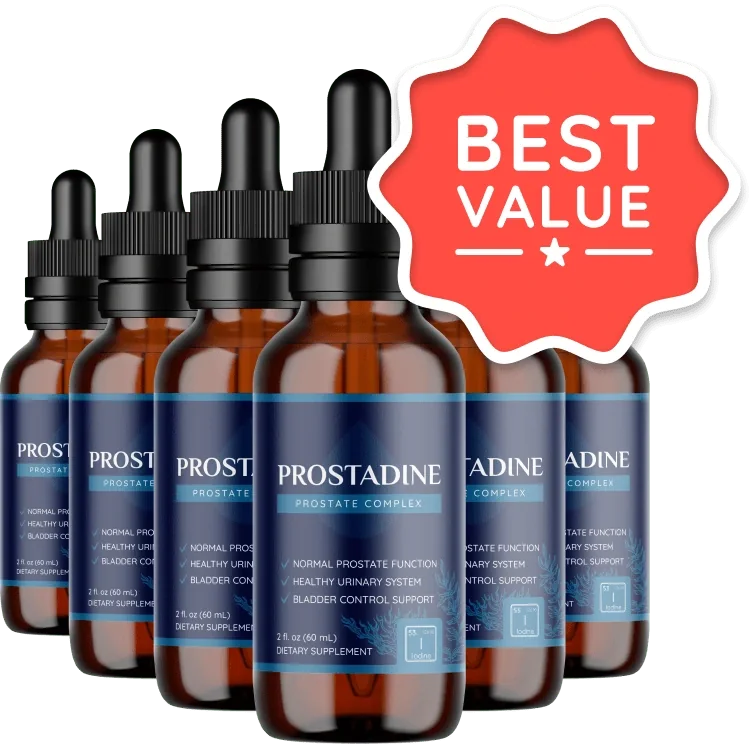
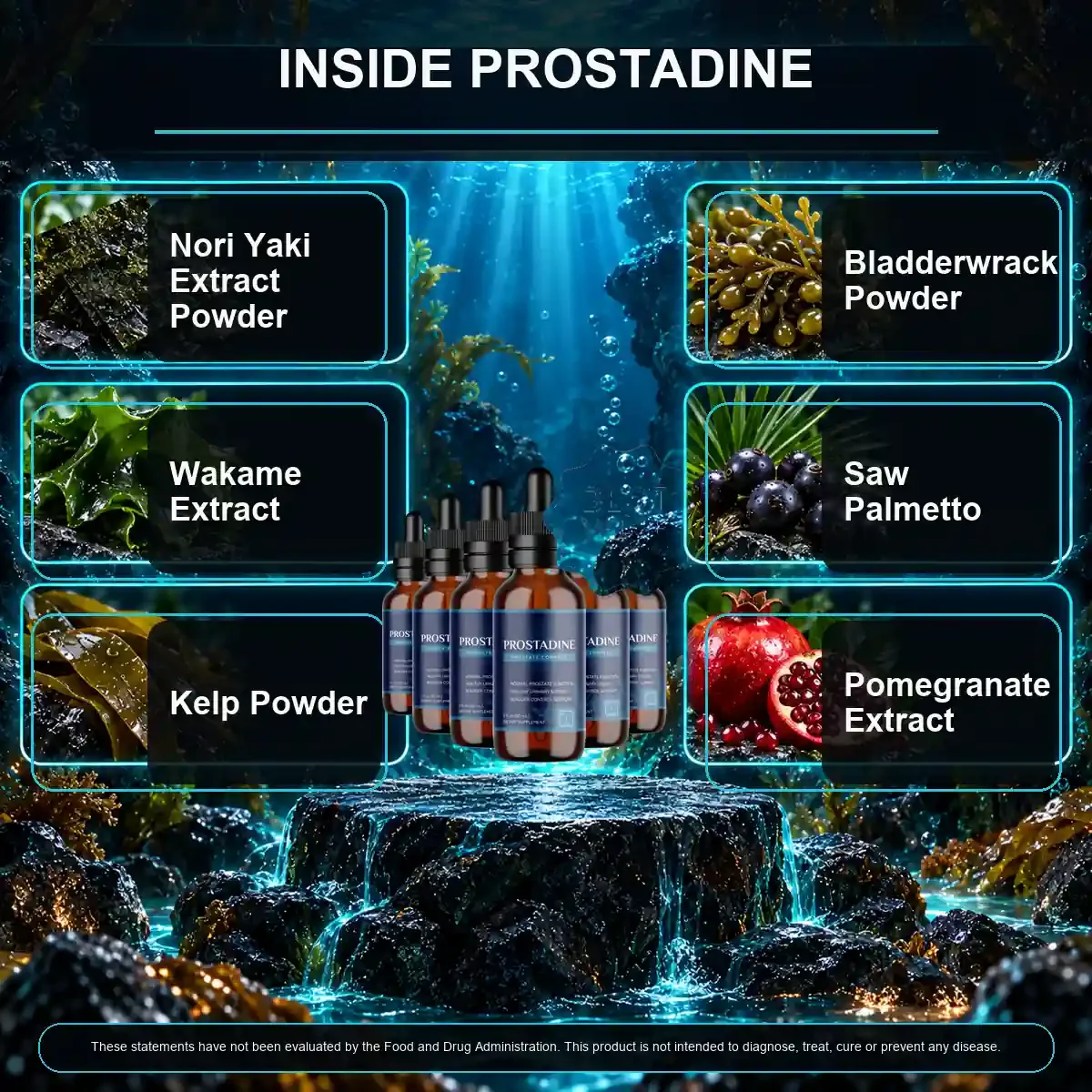
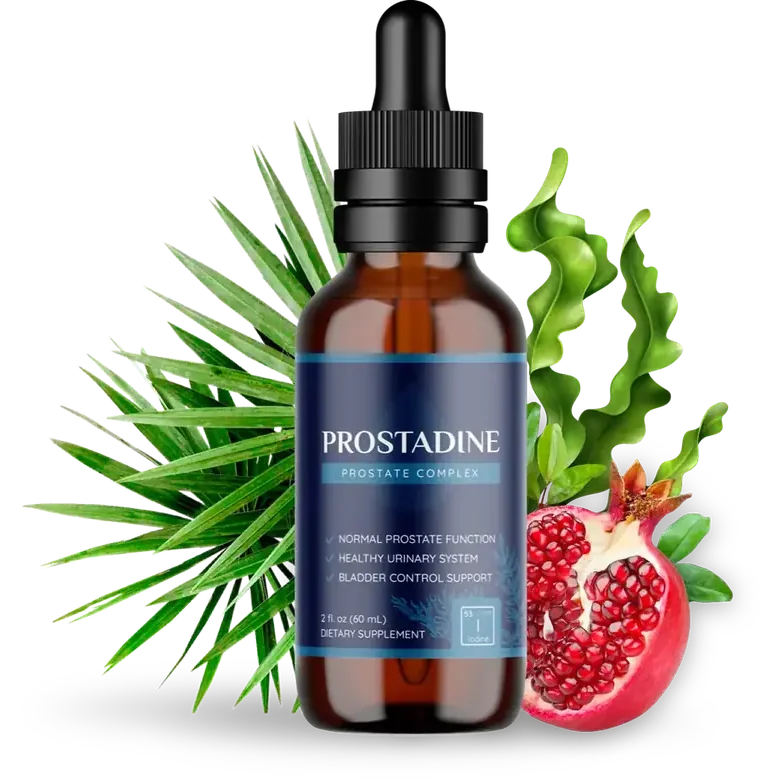
Prostadine is a dietary supplement with nine named ingredients and no printed amounts. No trial has tested it. Read what we found on the saw palmetto page and in the prostate supplements guide.
Do not stop or change tamsulosin, finasteride or any prescription because you started a supplement. Tell your doctor and pharmacist what you take.
FAQ09
Enlarged prostate questions, answered
What is the prostate?
The prostate is a walnut-sized gland that sits just below the bladder and wraps around the urethra, the tube urine leaves through. It also produces part of the fluid in semen. Because it surrounds the urethra, a larger gland can narrow the passage (NHS, Prostate Enlargement).
What is BPH?
BPH, or benign prostatic hyperplasia, is a non-cancer enlargement of the prostate. It affects about 5% to 6% of men aged 40 to 64 and 29% to 33% of men 65 and older (NIDDK, Enlarged Prostate (BPH)). The cause is unclear; aging and hormone changes are thought to play a role.
What are common signs of an enlarged prostate?
Common signs are trouble starting to urinate, a weak or stop-start stream, dribbling, urgency, going often and waking at night to go (NIDDK, Enlarged Prostate (BPH)). They usually build slowly. The same signs can come from infection or other problems, so an exam is the only way to tell.
Is an enlarged prostate cancer?
No. BPH is not cancer and does not raise the risk of prostate cancer (NHS, Prostate Enlargement). A man can have both at once, and the early signs can look alike, which is why new urinary symptoms deserve a doctor's exam rather than a guess.
Does a PSA test detect BPH?
No. PSA is a protein made by normal and cancerous prostate cells, and BPH can raise it too (NCI, PSA Test). A high result does not mean cancer, and only about 25% of men biopsied for an elevated PSA are found to have cancer.
When should I see a doctor?
See a doctor for any new urinary change, such as a weak stream, urgency or night trips. Get care the same day for blood in the urine, fever with painful urination, severe pain, or being unable to pass urine at all, which is an emergency (NIDDK, Enlarged Prostate (BPH)).
Can lifestyle changes help urinary symptoms?
Mild symptoms are often managed with lifestyle steps: less alcohol and caffeine, and less fluid in the evening (NHS, Prostate Enlargement). A drink-and-bathroom diary helps your doctor see the pattern (MedlinePlus, Nocturia). These are habits, not a medicine.
Do supplements help with an enlarged prostate?
No supplement is established as a treatment for an enlarged prostate. Saw palmetto, the herb studied most, did no better than placebo in large trials (Barry et al. (CAMUS), JAMA 2011). A dietary supplement is not a medicine, and Prostadine has no trial of its own. Keep taking any prescribed medicine.
Who wrote this10
Written and reviewed by
Pages built from the bottle front, the sales page and linked NIH, FDA, FTC and peer-reviewed sources.
Last updated . See our editorial standards and how we check reviews. This website is run by Goprostadine, a USA Authorized Prostadine Retailer, not by the manufacturer. We are paid when you buy through our order links.
Keep reading
More about Prostadine

USA Authorized Prostadine Retailer
Ready to try Prostadine?
Show the bottle to your doctor first, as the sales page itself advises, then pick a pack. Bigger packs cost less per bottle, and the 60-day guarantee counts from delivery.
- Secure BuyGoods checkout
- 60-day money-back guarantee
- Ships from the U.S.