Guides
Prostate Health Guides: Education, Not Treatment
Prostate health guides are plain-language explainers on the gland, on supplements for it, and on how supplements mix with medicines. Goprostadine offers three, each with cited sources. They teach and do not treat: none diagnoses a problem, recommends a dose or replaces a doctor. Start with prostate basics if the topic is new to you.
Written by the Prostadine label deskUpdated
The three guides01
What are the three prostate health guides?
One on the gland, one on supplements, one on medicine interactions.
The three guides are prostate basics, the prostate supplements guide, and supplements and prostate medicines. Each stands alone, and together they cover what a buyer of a prostate supplement should know. Every claim in them links to a source.
Prostate basics
Where the gland sits, what an enlarged prostate is, common signs, how PSA fits in, and which signs need care the same day.
Prostate supplements guide
What studies found for saw palmetto, pomegranate, seaweed and other common ingredients, and what labels often leave out.
Supplements and medicines
How herbs and minerals can interact with prostate drugs, thyroid medicine and blood thinners, and what to ask a pharmacist.
All three are written by the Prostadine label desk and use the same standards as the product pages. See the editorial standards.
Scope02
Are the guides treatment advice?
No. They explain how things work and what research found. They do not tell you what to take.
No, the guides are education, not treatment advice. They do not diagnose, set a dose or suggest a supplement in place of care. A licensed clinician who knows your history has to do those things.
Prostadine is a dietary supplement, and the guides treat it that way. FDA does not approve supplements before sale, and a product sold to treat a disease would be a drug (FDA 101: Dietary Supplements).
If you cannot pass urine at all, see blood in your urine, have fever or chills with painful urination, or have severe belly, back or side pain, get care the same day. If you cannot urinate, go to an emergency room (NIDDK, Enlarged Prostate (BPH)).
If you take prescribed medicine, keep taking it as directed. Do not stop or change it because of what you read, here or anywhere else.
Where to start03
Where do I start if I am new?
Start with prostate basics. Then pick the guide that matches your next question.
If you are new, start with prostate basics. It explains the gland and its common changes, so the other two guides make sense. If you already know the basics, jump to the guide that fits your question.
| Your question | Read this |
|---|---|
| What is the prostate, and what is BPH? | Prostate basics |
| Do saw palmetto, pomegranate or seaweed work for urinary symptoms? | Prostate supplements guide |
| Can I take a supplement with tamsulosin, finasteride or warfarin? | Supplements and medicines |
| What is in Prostadine, and what is missing? | Prostadine ingredients |
Reading order matters less than your own situation. A man with new urinary symptoms should read the urgent signs first, then book an exam (NHS, Prostate Enlargement).
Guide 104
Who should read the prostate basics guide?
Anyone with urinary changes, a family history or a first doctor visit coming up.
The prostate basics guide is for men and partners who want a clear picture of the gland. An enlarged prostate, or BPH, is common: about 5% to 6% of men aged 40 to 64 and 29% to 33% of men 65 and older have it (NIDDK, Enlarged Prostate (BPH)). It is not cancer and does not raise cancer risk (NHS, Prostate Enlargement).
The guide covers the signs doctors ask about, including a weak stream, urgency and waking at night to pass urine. It explains why those signs have many causes, such as evening drinks, diabetes and medicines (MedlinePlus, Nocturia). It also explains what a PSA test can and cannot tell you. A high result can come from BPH or infection, and finasteride and dutasteride lower the number (NCI, PSA Test).
Screening is a personal decision to make with a doctor. For men 55 to 69, the CDC describes it as a shared choice (CDC, Prostate Cancer Screening).
Guide 205
What does the supplements guide cover?
The evidence for common prostate ingredients, shown without hype.
The supplements guide reviews what research found for ingredients often sold for the prostate. Saw palmetto is the main case. NCCIH says it is probably not helpful for BPH urinary symptoms (NCCIH, Saw Palmetto), and a review of 32 trials of 5,666 men found no benefit (Tacklind et al., Cochrane 2012).
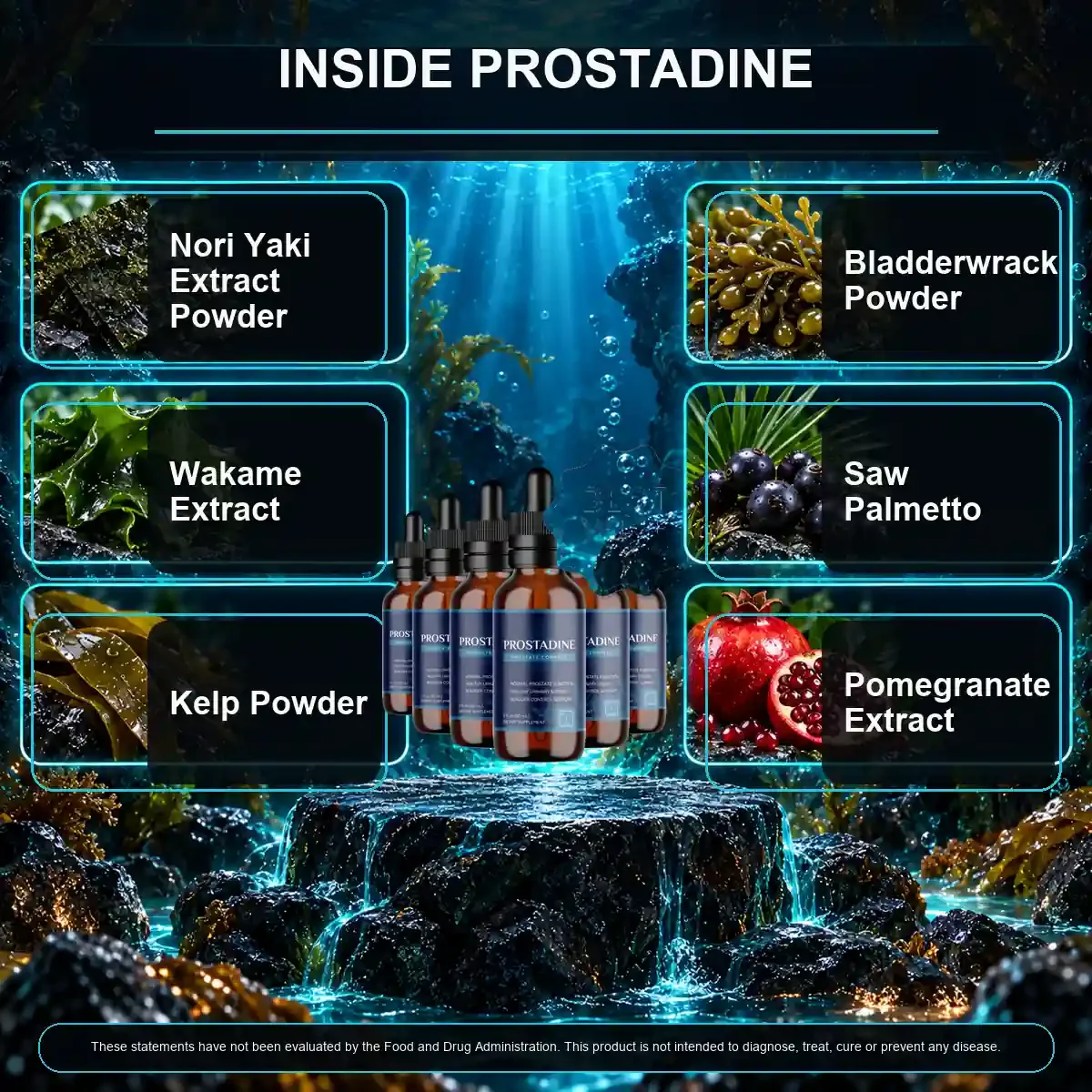
The guide also covers why supplement labels matter. A product with no printed amounts, like Prostadine, cannot be compared with any study dose. It points out testosterone and libido products too, where evidence is weak and some men's products have been found to hide drugs (Petre et al., Nutrients 2023 (ED supplements)) (Tucker et al., JAMA Netw Open 2018).
- Which ingredients have human trials, and which have none
- What a study dose is, and why a label must show amounts
- How to read a supplement claim and a sales page
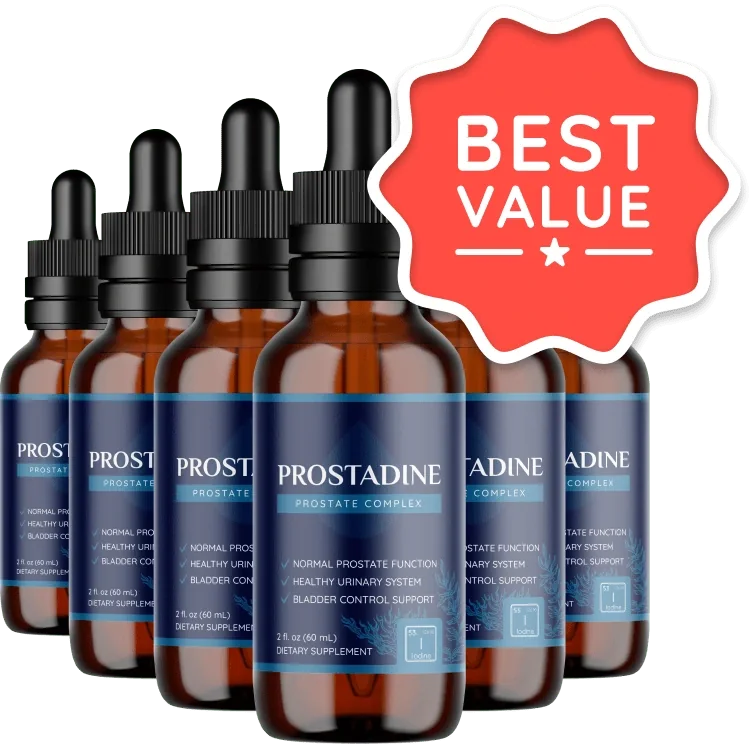
Prostadine: from $49 a bottle2 fl oz (60 mL) dropper · 2, 3 or 6 bottles · 60-day money-back guarantee
See packsGuide 306
What does the supplements and medicines guide cover?
How herbs and minerals can change the way a medicine acts, and who should ask first.
The medicines guide explains how a supplement can interact with a drug. Herbs can change how the body clears some medicines, so doctors urge caution with narrow-range drugs such as warfarin and digoxin (NCCIH, Herb-Drug Interactions). Iodine adds to the effect of antithyroid drugs (NIH ODS, Iodine).
It ends with a checklist to bring to your doctor or pharmacist. Supplements can also affect lab tests and surgery, so the guide says when to tell your surgeon (FDA 101: Dietary Supplements).
Guides and blog07
How do guides differ from blog posts?
Guides are fixed references. Blog posts are shorter, topical pieces.
A guide is a long, sourced reference that we keep current. A blog post answers one narrower question, such as a single ingredient or a single claim, and may be tied to a date. The guides come first; the blog fills in detail.
Both follow the same rules. Facts come from the bottle, the vendor's pages and public sources, and sales claims are quoted and answered. We never invent amounts, ratings or reviewers.
Sources08
Are sources cited in the guides?
Yes. Every fact links to a reference you can open.
Yes, every health fact in the guides carries a numbered citation. Sources include NIH, NIDDK, NCCIH, the NHS, the FDA and peer-reviewed trials. Sales pages count as claims, not as proof.
If you find a broken link or an error, email [email protected]. For a product question, see the FAQ. The site earns money from Prostadine order links and says so on the disclaimer page.
FAQ09
Prostate health guides: questions and answers
What are the three guides?
The three guides are prostate basics, the prostate supplements guide, and supplements and prostate medicines. The first explains the gland and BPH, the second reviews the evidence for common ingredients, and the third covers drug and supplement interactions. Each cites its sources.
Are the guides treatment advice?
No. They are education only and do not diagnose, set doses or replace a doctor. Prostadine is a dietary supplement, not a drug, and FDA does not approve supplements before sale (FDA 101: Dietary Supplements). Keep taking prescribed medicine and see a clinician about symptoms.
Who should read the prostate basics guide?
Anyone with urinary changes, a family history of prostate problems, or a doctor visit coming up. It explains BPH, which affects about 29% to 33% of men 65 and older, and lists the signs that need same-day care (NIDDK, Enlarged Prostate (BPH)).
How do guides differ from blog posts?
Guides are long sourced references that we keep current. Blog posts are shorter pieces on one narrow question and may be tied to a date. Both follow the same sourcing rules, and neither is medical advice.
Are sources cited?
Yes. Each health fact in the guides carries a numbered citation to an NIH, NIDDK, NCCIH, NHS, FDA or peer-reviewed source. Vendor pages are cited as claims, not proof. Citations open to the original, so you can read them yourself.
Where do I start if I am new?
Start with prostate basics, which explains the gland and its common changes. Then read the supplements guide if you are weighing a product, and the medicines guide if you take any prescription. Urgent signs, such as being unable to pass urine, need care the same day.
Who wrote this10
Written and reviewed by
Pages built from the bottle front, the sales page and linked NIH, FDA, FTC and peer-reviewed sources.
Last updated . See our editorial standards and how we check reviews. This website is run by Goprostadine, a USA Authorized Prostadine Retailer, not by the manufacturer. We are paid when you buy through our order links.
Keep reading
More about Prostadine


USA Authorized Prostadine Retailer
Ready to try Prostadine?
Show the bottle to your doctor first, as the sales page itself advises, then pick a pack. Bigger packs cost less per bottle, and the 60-day guarantee counts from delivery.
- Secure BuyGoods checkout
- 60-day money-back guarantee
- Ships from the U.S.